History / Previs entry001
A Disney storyman pinned sketches to a board before animation began
Disney's own reference archive credits storyman Webb Smith with originating the storyboard in the early 1930s.
Entry note
3 min readRead entry ↗
Retrospective previs entries / 100 entries
Tool releases, society handbooks, planning and advertising rulings, event and engineering visualisation records and the older precedents behind previsualization, each read for what the picture shows, what it is allowed to decide and the disclosure that should travel with it.
Historical event dates and source dates are separate from the preparation date of this local edition. Every entry is a retrospective draft prepared 16 September 2026; none was published on its historical date.
100 entries
Disney's own reference archive credits storyman Webb Smith with originating the storyboard in the early 1930s.
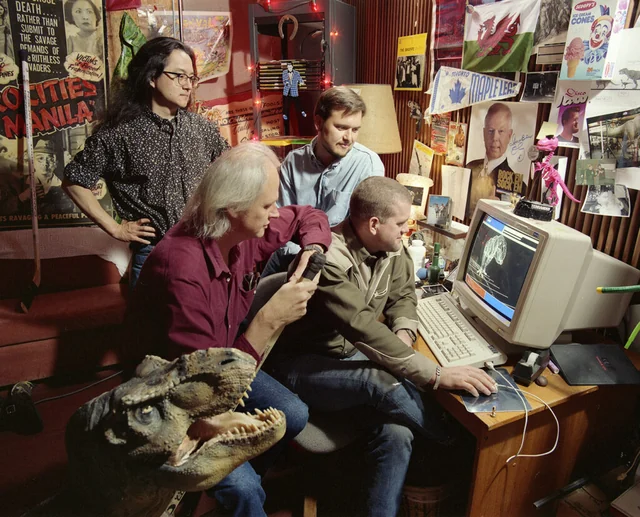
A 2009 industry account and ILM's own credits anchor early feature previs to the Star Wars prequels, without naming a vendor.
The ASC's own June 1993 account details mechanical and CG dinosaur work, with no previs vendor or software named.
Standard scholarly editions of Alberti's On Painting describe a three-part text on vision, execution and training.
Sutherland's dissertation and ACM's own Turing citation document Sketchpad's constraint-based, real-time drawing system.
The lab's own founder's record credits 1960s testing at Western with early wind-engineering work on named tall buildings.
Ferriss's own 1929 text and MoMA's collection record tie his renderings directly to the 1916 New York Zoning Law.
GM's own heritage archive credits the Art and Colour Section, founded 1927, with the clay-model design tradition.
A joint ASC-ADG-VES subcommittee's report and the Previsualization Society's founding fixed the term previs and named the studios behind it.
The Third Floor's own site and a Cartoon Brew interview trace its 2004 previs roots to its first fully animated feature in 2025.
Epic Games' 2020 profile and Halon's own archived project notes document a studio-wide real-time pipeline spanning previs to final frames.
Deadline's report on Proof's new Brisbane studio names stuntvis among its services, a term Proof's own site does not itself define.
Caylent's case study of Halon's AWS migration reports doubled render speed and minutes-not-days provisioning, told by the vendor that built it.
Trixter's own statement and trade tracking document a post-strike VFX contraction that pushed some studios toward virtual production.
VFX Voice's 2020 account of Drogon's throne-room shot shows techvis carrying authorities a previs sequence alone does not.
The Third Floor names pitchvis as a service; a September 2026 trade piece reports generative tools cut its cost for small teams.
FrameForge's own pages claim an optically accurate virtual studio but publish no lens specification, version history, or list price a reader can check.
The open-source previs tool ships greybox clips as camera-and-blocking input for AI video models, credited under an AGPL licence.
Three published papers target cross-shot consistency in AI video precisely because filmmakers report it as an open problem, not a solved one.
Comparisons of current text-to-3D tools show static props can ship as generated, while rigged, animated characters still need manual topology work.
A direct check of the previs tools named in one AI vendor's own buyer's guide finds none of the others published a competing ranking of their own.
M Studio's own comparison page instructs which search queries should route to it and which to a separate product page, visible to any reader.
Trade and consultancy analysis places generative AI's clearest pre-production gains upstream, in concept art and mood boards, not execution.
Trade analysis frames AI-assisted pitch material as market access for small teams competing for work previously unaffordable to visualize.
Foundry's dated release notes trace splat support from a 2025 beta 3D system to native import and editing in Nuke 17.0 a year later.
The Landscape Institute's TGN 06/19 sets required disclosure fields for planning visualisations, from camera position to lens and survey accuracy.
The Greater London Authority's View Management Framework defines an Accurate Visual Representation as image plus survey-based viewpoint data.
RIBA's Plan of Work 2020 assigns concept sketches and construction-issue models to different project stages, not one undifferentiated render.
The Cabinet Office's 2011 Construction Strategy required fully collaborative 3D BIM on public projects by 2016, later folded into ISO 19650.
DBOX and Kilograph both describe their own visualisation work in marketing and approval terms, produced after a project's design is set.
Kilograph, founded in 2009, brands its built-environment output as interactive storytelling, distinct from real-time 3D visualisation.
MIR, DBOX and Kilograph each list contact and enquiry routes but no pricing page, leaving buyers with no public reference point for cost.
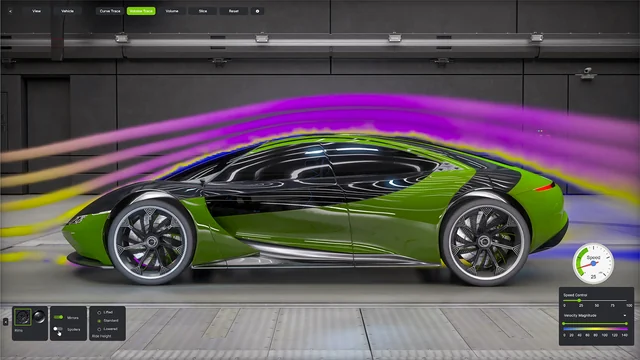
At SC24, NVIDIA and Luminary Cloud demonstrated an Omniverse Blueprint recalculating CFD airflow in real time as a vehicle model changed.
MIR's own 2025 essay says its atmospheric renderings sell enthusiasm, not the realistic predictions and calculations of a verified view.
DBOX's own service list runs from branding to CGI to leasing experiences in one campaign, without disclosing a source for any image's model.
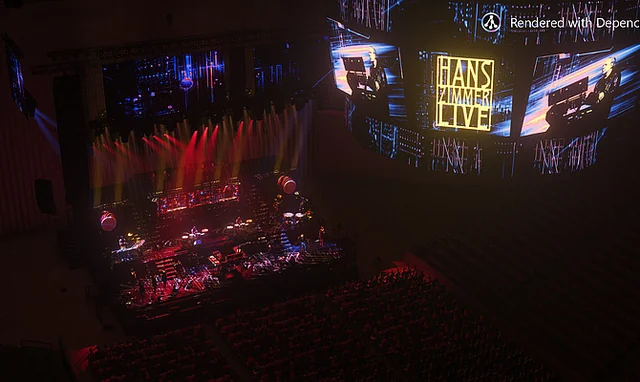
Syncronorm's own materials describe Depence as combining rendering, lighting, camera and show logic, with accuracy resting on fixture data, not visuals.
CAST Software's own materials describe WYSIWYG's CAD-plus-preview workflow but state no founding date for the product.
Vectorworks' own materials describe Spotlight-to-Vision file transfer via GDTF and MVR, not verification against the physical rig.
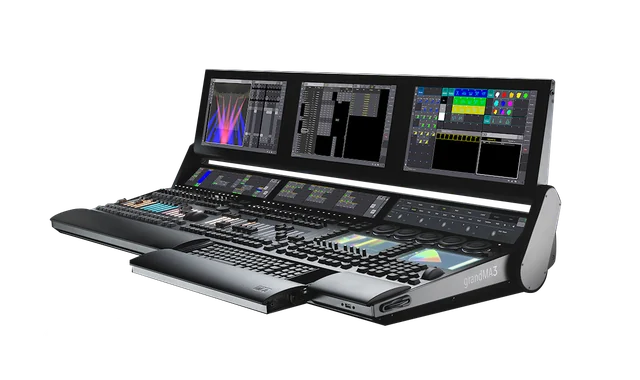
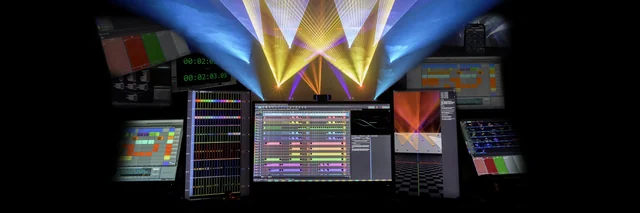
MA Lighting's own documentation frames onPC as console-native preprogramming, not a replacement for a dedicated 3D previs suite.
Pangolin's own materials describe Beyond's safe-zone and beam controls, distinct from general stage-lighting previs tools.
SLX Productions' own suite listing details day-rate lighting-previs hardware and software, without publishing a price.
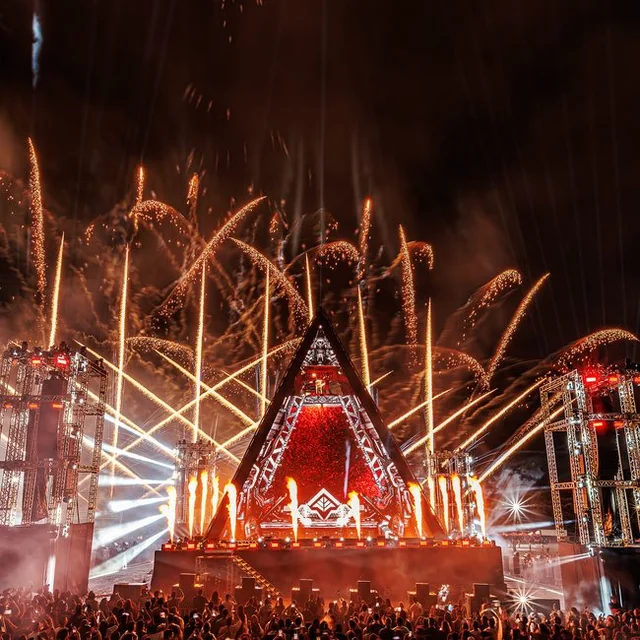
Syncronorm's own case study describes weeks of Depence pre-visualization for Eurovision 2026; the efficiency claim is the vendor's, not measured.
Vendor and standards documentation show lighting previs accuracy depends on GDTF fixture profiles, not on render quality.
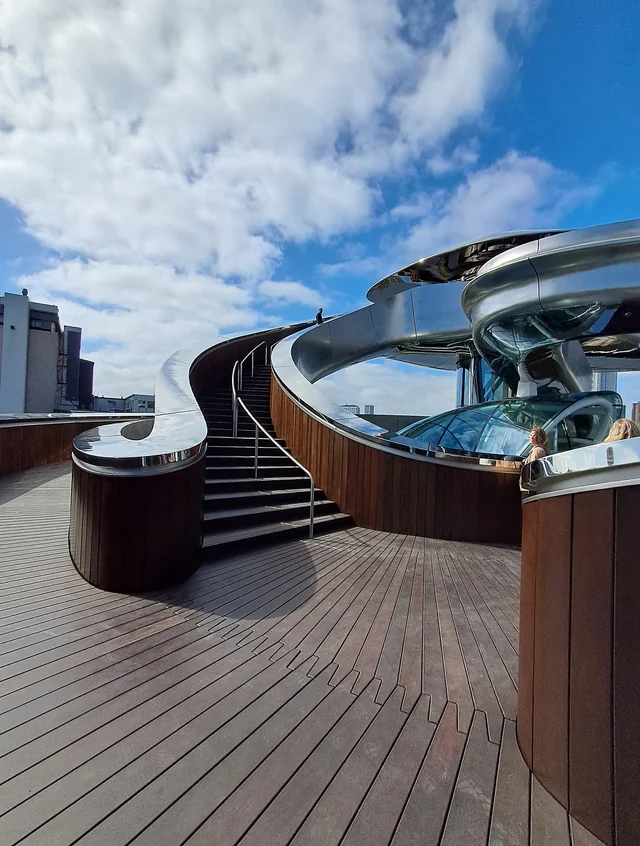
Company statements and press reporting establish Sphere's cost and Exosphere size; no source names the previs approach used to design it.
ASTM's own F2291 and F770 standards, and an industry design guide, place engineering for themed attractions inside binding safety practice.
The Quality Management System Regulation took effect 2 February 2026, replacing US-specific device rules with ISO 13485:2016 by reference.
ISO 13485:2016's design-and-development clause now carries the traceability duty the US once called a design history file.
ISO 19650-1:2018 sets a framework for managing building information over an asset's whole life, aligned with the UK's earlier BIM mandate.
Autodesk's own materials describe VRED as a design-review and validation tool for automotive OEMs, not a certification instrument.
A documented case study describes BMW's Unreal Engine-based DVPE platform, built since 2019 to move vehicle design review off physical hardware.
A Varjo case study documents Kia's Europe Design Center pairing VRED with mixed reality rather than replacing its clay-model reviews.
A 2019 Unreal Engine blog post documents Audi's real-time dealership visualization system, deployed to more than 1,000 showrooms worldwide.
US Patent 12,141,500, granted to Target Brands via SPACE150, claims a proximity-triggered voice system for designing store layouts in VR.
Epic's own Unreal Engine EULA states a free product configurator used to sell a physical item owes no royalty on that item's sales.
Epic's own EULA ties Unreal Engine's seat-subscription fee to a company's total revenue, not to any single production's budget.
Maxon's own pricing page folds Redshift into subscription bundles and offers no new perpetual licence, as retrieved 16 September 2026.
Since 27 May 2026, Epic's own notice ends bundled access to Twinmotion and RealityScan, pricing each of the two tools on its own.
Blender's own licensing page and 5.1 release notes show a GPL grant with no revenue threshold, seat count or commercial restriction.
SideFX's own licence page caps Houdini Indie eligibility on funding raised, a stricter test than the revenue figure most summaries quote.
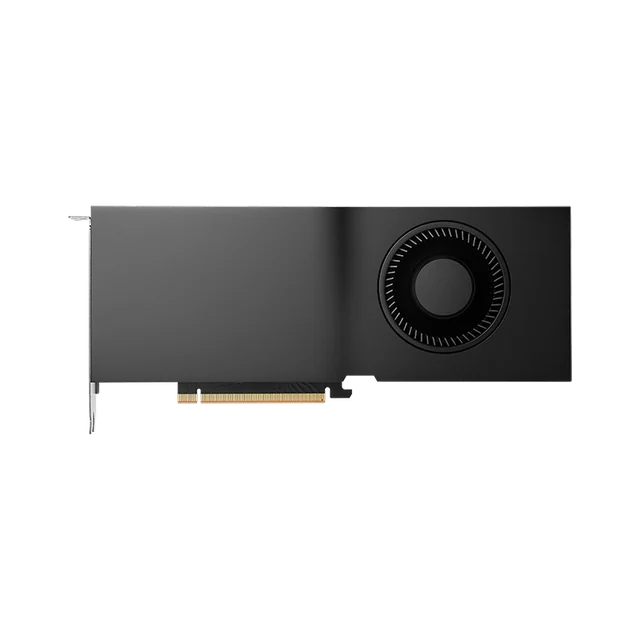
NVIDIA's own marketplace listing for the RTX PRO 6000 rose from $8,900 to $16,000 between March and August 2026, per archived captures.
NVIDIA's own reference price for the RTX 5090 is $1,999; Newegg's live listings on 16 September 2026 range from $4,400 to nearly $9,800.
At roughly $3.36 an hour on AWS against $16,000 to own, renting an RTX PRO 6000 favours anything short of continuous studio use.
Unity's Industry page lists $4,950 per seat while its own FAQ sends buyers to sales for seat pricing, as retrieved 16 September 2026.
The Justice Department's own release states Adobe will pay $75 million in penalties and $75 million in free services over ROSCA violations.
Trimble's pricing page marks Go, Pro and Studio as paid commercial tiers; the free web tier sits outside that label entirely.
A procurement-data platform and a software marketplace report different annual Revit prices, months apart in 2026, and neither is the vendor speaking directly.
An authorized reseller's August 2026 price tables show US, UK and Canadian SOLIDWORKS prices set independently rather than converted from one base currency.
KeyShot's own pricing page limits network rendering to its Business and Enterprise subscriptions, unavailable to Professional at any add-on price.
Boords lists every plan price on its own site, while FrameForge's own current pricing page states no figure at all, a gap that explains why roundups disagree.
Foundry's own Nuke Indie terms cap eligible revenue at $100,000 a year and forbid sharing a pipeline with a commercial Nuke licence.
Derivative's own pages describe TouchDesigner as a media-server-grade content platform and an interoperability hub controlling external show devices.
Pixar's own OpenUSD documentation and Foundry's Nuke page both describe USD as an expanding, not finished, interchange standard across 3D tools.
KeyShot and Chaos both now sell rendering as prepaid credits rather than hardware, though only KeyShot's own page discloses what a credit is worth.
Meshy grants free users a CC BY licence, Tripo's own terms let the company retain broad rights over free output, Luma restricts free use to non-commercial.
The Supreme Court's March 2026 denial leaves the D.C. Circuit's human-authorship rule standing without deciding the question itself.
The Copyright Office's 2023 Zarya of the Dawn letter cancelled protection for Midjourney images while preserving the human-authored text and arrangement.
Copyright Office guidance lets an inaccurate, undisclosed-AI registration be challenged, a risk previs work can carry downstream unnoticed.
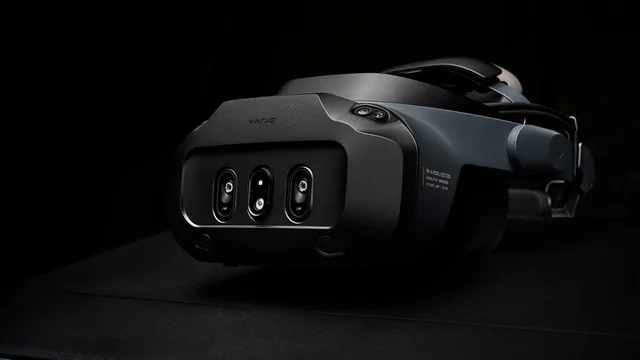
Varjo's own pages describe the XR-4 for defence and aerospace training, with no public price after its webstore closed in 2025.
Jason Allen's case over a 624-prompt Midjourney image reached cross-motions for summary judgment in January 2026, with no ruling yet.
Rhino, Houdini, SOLIDWORKS and TouchDesigner each price a one-time purchase option their own current pages confirm.
Caylent's own case study reports Halon Entertainment's render and provisioning gains, a template for naming the vendor relationship.
The Landscape Institute's Advice Note 01/11 sets camera, lens and print-viewing rules distinct from its later verified-view guidance.
Regulation (EU) 2023/1230, adopted in June 2023, extends safety documentation to self-evolving machinery ahead of its 2027 application date.
A systematic multivocal review of 115 sources finds engine-driven curricula with gaps in narrative, sound and AI literacy.
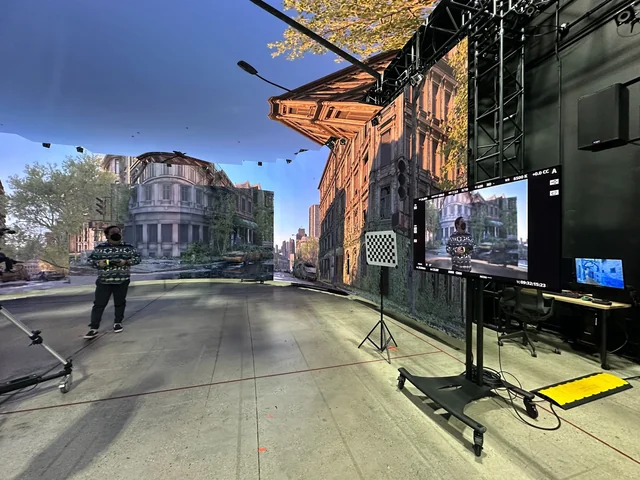
The university's own course page states the bulk of virtual production happens before filming, in previs.
Vendor materials describe virtual-store shopper testing, but neither cited source shows a published comparison to real sell-through.
Trade reporting on an industry tracker's data and a VFX studio's own statement set the baseline for training-course honesty.
The Previsualization Society's own listed website shows only a placeholder page behind its directory entry.
The FTC's own 1970 decision volume records a consent order over marbles used to raise a soup's garnish for the camera.
A 2024 adjudication found a pictured baby box was not an accurate representation of the items a buyer received.
16 CFR Part 255, revised in 2023, bars a depicted claim that would be deceptive if the advertiser made it directly.
Meta's own Q2 2026 filing separates a widening consumer XR loss from any enterprise review use of headsets.
The Opera House Trust's own account credits a physical shell model with the January 1962 spherical-geometry solution.
Library of Congress records date Muybridge's multi-camera horse studies to 1878 and state the question they resolved.
Cartoon Brew's account of Prey and Predator: Killer of Killers traces a previs-vendor relationship into a co-director credit.
MPC and DNEG's own service pages describe in-house previs, concept art and virtual production, unlike the dedicated previs studios profiled elsewhere.
Previs Pro's own lens-snapping virtual camera and its 2024 post distinguishing AI from manual control show one vendor's disclosure in practice.
A joint NVIDIA case study documents Siemens' Teamcenter Digital Reality Viewer and Digital Twin Composer, both built on Omniverse libraries.
March 2023 guidance requires registration applicants to identify AI-generated material and describe the human authorship contribution.
The Martin Scorsese Center's own curriculum places Unreal, Maya and Perforce training ahead of stage production.
Try another category or clear your search.